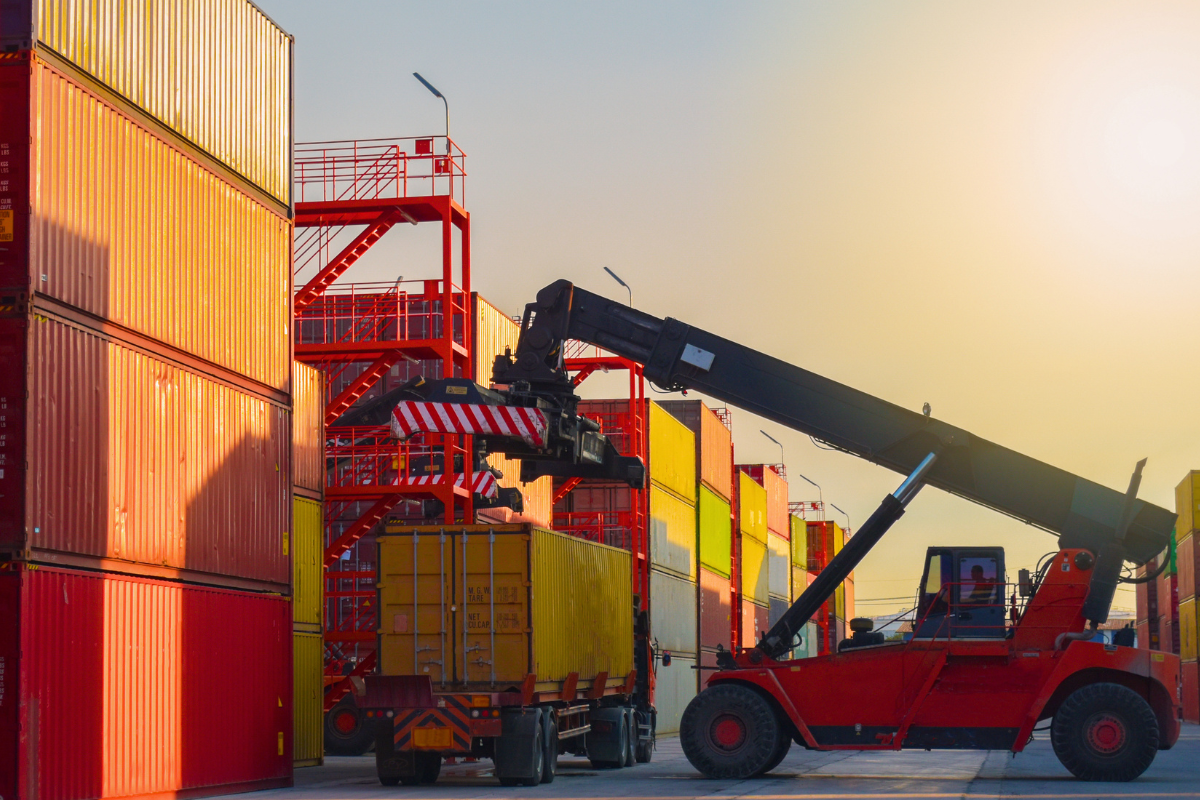
Ports, container terminals, and intermodal facilities depend on heavy mobile equipment to keep cargo moving. Reach stackers, terminal tractors, container handlers, forklifts, and other machines often operate for long hours under demanding conditions.
These machines also bring together many of the elements that can lead to a fire: high temperatures, hydraulic fluid, fuel, electrical components, and combustible debris.
Preventive maintenance and inspections are essential for reducing those risks, but they cannot eliminate every potential failure. Onboard fire detection and suppression can provide an additional layer of protection by helping respond to a fire directly on the machine.
Understanding the hazards and protecting equipment accordingly can help ports protect operators, critical assets, and terminal productivity.
Why Is Port Equipment at Risk of Fire?
Heavy mobile equipment brings together the three basic elements needed for a fire: heat, fuel, and oxygen.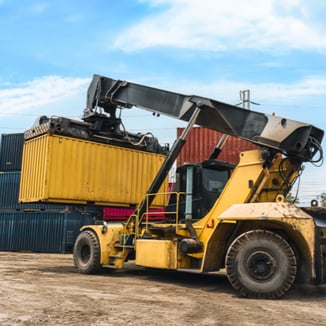
Port equipment may operate under heavy loads and through long shifts while being exposed to vibration, heat, contamination, and normal equipment wear.
Potential fire hazards can include:
- Hydraulic or fuel leaks reaching hot surfaces
- High-temperature engine and exhaust components
- Electrical faults or damaged wiring
- Combustible debris accumulating near ignition sources
Regular inspection and maintenance can reduce these risks, but equipment conditions can change between scheduled services.
What Are the Most Common Fire Hazards on Port Equipment?
Hydraulic and Fuel Leaks
Reach stackers, container handlers, forklifts, and other cargo-handling equipment rely heavily on hydraulic systems.
Hoses, fittings, and lines are exposed to pressure, vibration, movement, and wear. If hydraulic fluid or fuel reaches a hot engine, turbocharger, exhaust, or aftertreatment component, ignition can occur.
Leaks, damaged fittings, worn hoses, and areas where fluids can collect should be addressed promptly.
Hot Engine and Exhaust Components
Engines, turbochargers, exhaust systems, and aftertreatment components can reach high temperatures during operation.
Combustible fluids or debris near these components can increase fire risk, making cleanliness and leak prevention especially important.
Electrical Faults
Damaged wiring, loose connections, short circuits, battery issues, and overheated electrical components can create ignition sources.
Because vibration and machine movement can contribute to electrical wear over time, inspections should include checking for chafing, damaged insulation, loose connections, and signs of overheating.
Debris Buildup
Grease, oil residue, dirt, packaging material, vegetation, and other combustible debris can accumulate on equipment.
Routine cleaning - particularly around hot components - should be part of a port's overall fire prevention program.
Which Port Equipment Can Face Fire Risk?
Fire risk is not limited to one type or size of machine.
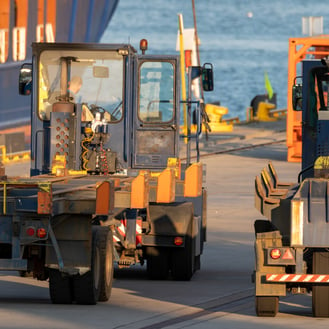 Equipment that may need to be evaluated includes:
- Reach stackers
- Empty container handlers
- Terminal tractors
- Heavy forklifts
- Top loaders
- Mobile material handling equipment
- Maintenance and support vehicles
Each machine has different hazards based on its design, fuel type, operating environment, and duty cycle.
Fire protection should therefore be evaluated at the machine level rather than assuming one solution will fit an entire fleet.
Why Isn't Fire Prevention Alone Enough?
Prevention should always be the first line of defense.
Regular maintenance, inspections, housekeeping, and operator training can significantly reduce equipment fire risk. But even a strong preventive maintenance program cannot predict every failure.
A hydraulic hose can rupture between inspections. An electrical fault can develop unexpectedly. A component can overheat during operation.
That is why many heavy-equipment operators take a layered approach to fire protection: prevent the conditions that can lead to a fire while also preparing to respond if one occurs.
A properly designed fire suppression system adds that additional layer of protection.
It does not replace maintenance or operator training. It complements them.
How Does Fire Suppression Protect Port Equipment?
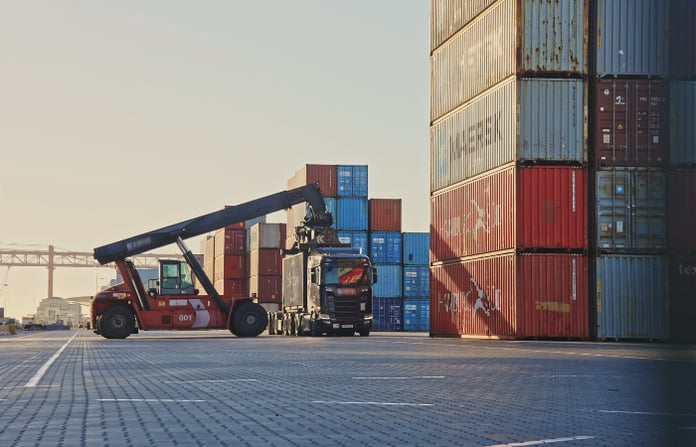
Heavy-equipment fire suppression systems are installed directly on the machine and designed around identified hazard areas.
Depending on the application, a system may include:
- Automatic fire detection
- Manual activation
- Operator alarms
- Suppression agent storage
- Distribution lines
- Strategically positioned discharge nozzles
When a fire is detected or the system is manually activated, suppression agent is discharged into protected areas of the machine.
System design should consider the equipment configuration, ignition sources, fuel sources, operating environment, and potential consequences of a fire.
Why Can One Equipment Fire Affect the Entire Terminal?
The impact of a fire may extend well beyond the machine where it begins.
Port equipment frequently operates near personnel, other machines, containers, trailers, maintenance areas, structures, and cargo.
A fire may also remove a critical piece of equipment from service while teams complete cleanup, inspection, repair, investigation, and fire suppression system restoration.
For an operation built around keeping cargo moving, losing even one important machine can affect productivity beyond the immediate incident.
How Can Port Operators Reduce Equipment Fire Risk?
An effective approach combines prevention, early identification of hazards, and fire protection.
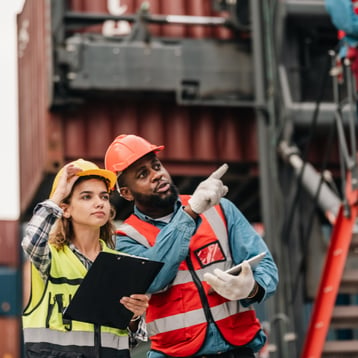 Maintenance and operations teams should:
- Inspect hydraulic and fuel systems for leaks
- Check electrical wiring and connections
- Keep engine compartments and other hot areas clean
- Replace damaged heat shields or protective components
- Address worn hoses and fittings
- Include fire hazards in preventive maintenance inspections
- Train operators to report smoke, unusual odors, visible leaks, or abnormal temperatures
- Evaluate whether onboard fire suppression is appropriate for critical equipment
Operators are especially important because they may be the first to notice changes in how a machine looks, smells, sounds, or performs.
What About Smaller Port Equipment?
Fire protection is not limited to the largest machines in a terminal.
Terminal tractors, forklifts, utility vehicles, and other compact machines may contain many of the same ignition and fuel sources while presenting tighter installation constraints.
AFEX's Compact Liquid Agent System is designed for compact, mid-sized, and space-constrained heavy equipment, providing another option for protecting equipment throughout port, terminal, and intermodal operations.