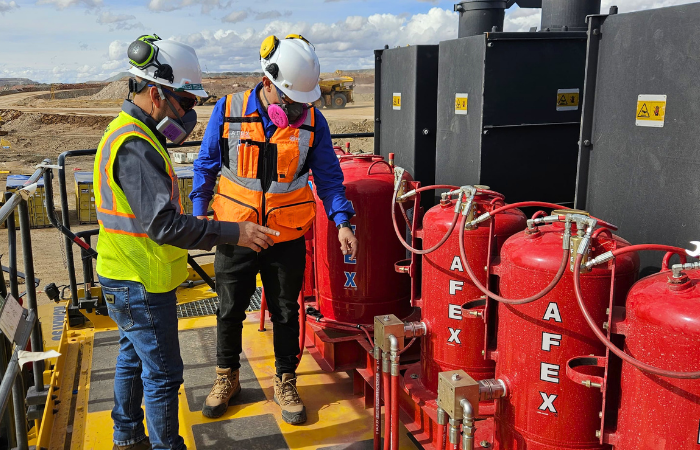
A fire on a piece of heavy equipment can escalate quickly.
Between hot engine components, hydraulic fluids, electrical systems, fuel lines, and debris buildup, many machines operate with fire risks already present. In industries like mining, forestry, waste and recycling, construction, oil and gas, transportation, and agriculture, those risks are often part of the daily operating environment.
That is why many equipment owners and operators rely on fire suppression systems for heavy equipment as an important layer of protection.
But for anyone researching fire suppression for the first time, the main questions are simple:
What is a fire suppression system?
How does it work on heavy equipment?
And what components are involved?
What Is a Fire Suppression System?
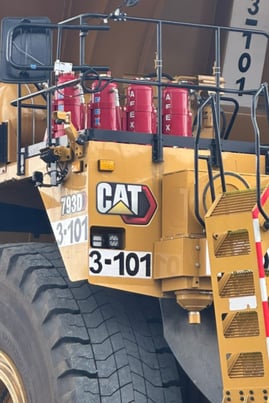 A fire suppression system for heavy equipment is a safety accessory permanently mounted to a piece of heavy-duty mobile equipment to help protect the machine and operator in the event of a fire.
Unlike a handheld fire extinguisher, which depends on a person seeing the fire, reaching the fire, and fighting it manually, an onboard fire suppression system is designed to react quickly. Many systems can detect a fire automatically, alert the operator, and discharge suppression agent into protected areas of the machine.
Most systems also include manual actuation options, allowing the operator or someone nearby to activate the system when needed.
The goal is simple: detect the fire early, alert the operator, and suppress the fire before it spreads.
Why Heavy Equipment Needs Fire Suppression
Heavy equipment fires are different from building fires or ordinary vehicle fires.
Heavy-duty mobile equipment operates in harsh, high-risk environments where machines are exposed to:
- Constant vibration
- Dust and debris
- High operating temperatures
- Long shifts and heavy loads
- Hydraulic fluid, diesel fuel, grease, and oil
- Combustible material such as wood fiber, paper dust, trash, or other debris
Many machines also operate far from immediate emergency response. Equipment may be deep in a mine, in a remote forest, at a waste facility, on a construction site, or in a high-production operation where every minute of downtime matters.
When a fire starts, response time is critical.
A fire suppression system helps:
- Protect the operator
- Alert nearby personnel
- Suppress the fire quickly
- Reduce equipment damage
- Limit downtime
- Help prevent the fire from spreading beyond the machine
Most importantly, it helps support safer operator response. During a machine fire, the operator’s first priority should be getting out safely, not climbing around a burning machine with a handheld extinguisher.
How Does a Fire Suppression System Work?
Most heavy equipment fire suppression systems follow the same basic process:
.png?width=696&height=447&name=how%20does%20a%20fire%20suppression%20system%20work(1).png)
The exact system design depends on the machine, the hazards, and the operating environment, but most systems include five key components: detection devices, a monitor panel, actuation devices, agent tanks, and a distribution network with nozzles.
1. Fire Detection
Fire suppression systems use detection components installed around the machine’s highest-risk fire zones. These areas may include engine compartments, hydraulic bays, transmission areas, fuel system areas, and other protected hazard zones.
The purpose of detection is to identify a fire as early as possible.
Two common types of fire detection used on heavy equipment are:
 Linear Detection Wire
Linear detection wire is a heat-sensitive wire routed through protected areas of the machine. It is often used in larger or enclosed hazard areas where multiple fire risks may be present.
When the high heat of a fire reaches the wire, it sends a signal to the system’s monitor panel.
 Spot Thermal Sensors
Spot thermal sensors are fixed-point sensors used to monitor specific high-risk locations. They are often installed near components that can reach high temperatures or create concentrated fire risk.
These detection devices help the system recognize dangerous heat conditions and initiate a response.
2. Operator Alert and System Activation
When a fire is detected, the monitor panel alerts the operator. Depending on the system, this may include visual and audible alarms.
At the same time, the system may activate automatically. Manual actuation options may also be available, allowing the operator or personnel nearby to discharge the system when needed.
Once activated:
Some systems can also integrate with telematics platforms. This can allow organizations to receive fire event alerts, machine location information, system response data, or remote actuation capabilities depending on the equipment and setup.
Even with automatic fire suppression, operator training is still important. Operators should know what alarms mean, how to exit safely, where manual actuators are located, and what steps to take after discharge.
Equipment Fire? Follow These 4 Steps
3. Agent Discharge and Distribution
After activation, suppression agent travels from the onboard tanks through a distribution network of tubing and/or hoses.
Nozzles are positioned to discharge agent directly into the machine’s protected hazard areas, such as:
The objective is to suppress the fire quickly and reduce the chance that it spreads throughout the machine.
A properly designed system does not simply spray agent randomly. It is engineered around the machine’s actual fire hazards so the agent reaches the areas where fire is most likely to occur.
What are the Main Components of a Fire Suppression System?
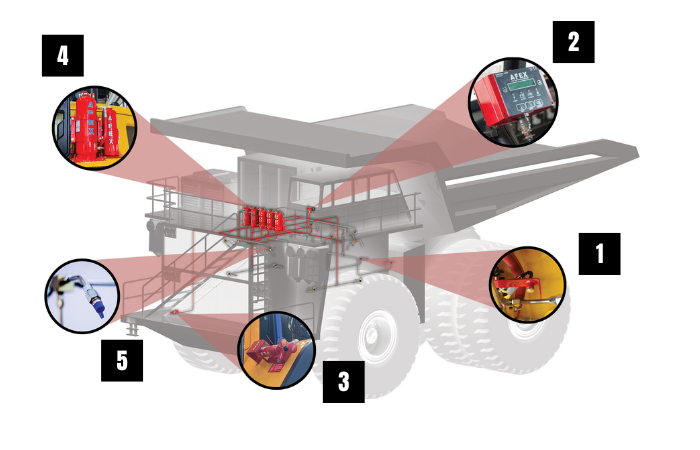 Most fire suppression systems for heavy equipment include five main components.
1. Detection Devices
Detection devices identify heat or fire conditions in protected hazard areas. These may include linear detection wire, spot thermal sensors, or other detection methods, depending on the system design.
2. Monitor Panel
This panel monitors the system, alerts the operator, and manages the system response. It provides important visual and audible indicators so the operator can understand the system status and respond appropriately.
3. Actuation Devices
Actuation devices trigger the discharge of the suppression system. Depending on the system, actuation may happen automatically when fire is detected, manually when an operator activates the system, or through a combination of both.
4. Agent Tanks
Agent tanks store the fire suppression agent installed on the machine. Tank size, placement, and agent type depend on the machine layout, hazard areas, and fire risk assessment.
5. Distribution Network and Nozzles
The distribution network carries the suppression agent from the tanks to the protected areas. Nozzles are aimed at the machine’s high-risk components to deliver agent where it is needed most.
Each component plays a critical role. The system must detect the fire, alert the operator, activate reliably, discharge properly, and deliver agent to the correct hazard areas.
What Types of Fire Suppression Agents Are Used on Heavy Equipment?
Heavy equipment fire suppression systems typically use dry chemical agent, liquid agent, or a dual-agent approach.
The right agent depends on the machine, the operating environment, and the fire risks identified during a fire risk assessment.
 Dry Chemical Systems
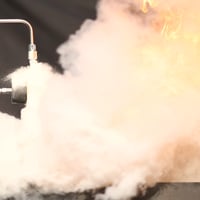
Dry chemical agent is commonly used to rapidly knock down flames. It is especially effective in enclosed or semi-enclosed spaces, such as engine compartments, where fuel, electrical, and debris-related fire risks may be present.
Dry chemical systems are commonly used for:
- Fuel fires
- Electrical fires
- Debris fires
- Engine compartment fires
Dry chemical agent helps flood protected areas and quickly suppress flames.
 Liquid Agent Systems
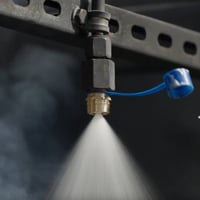
Liquid agent systems are known for cooling hot surfaces and helping reduce the risk of re-ignition. This can be especially important around components that remain hot even after the initial fire is suppressed.
Liquid agents are often used to protect:
- Turbochargers
- Exhaust components
- High-temperature engine areas
- Other hot surfaces where re-ignition may be a concern
Liquid agent systems are often selected when cooling is an important part of the fire suppression strategy.
 Dual Agent Systems
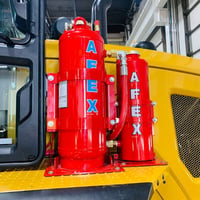
Dual agent systems combine dry chemical and liquid agent technologies to address different fire risks on the same machine.
For example, dry chemical agent may be used to flood an engine compartment for fast flame knockdown, while liquid agent may be applied to hot surfaces like turbochargers or exhaust components to cool the area and help reduce the risk of reflash.

For many heavy equipment applications, the best suppression strategy is not one agent versus another. It is choosing the right agent, or combination of agents, for the specific machine and risk profile.
Are Fire Suppression Systems Required on Heavy Equipment?
Fire suppression requirements vary by industry, region, job site, insurance provider, and company policy.
In some applications, fire suppression may be required by regulation, contract, insurance requirements, or site safety standards. In others, it may not be legally required, but it is still considered an important part of risk management.
A single heavy equipment fire can result in:
- Operator injury risk
- Equipment damage or total loss
- Production downtime
- Fire spread to nearby machines, materials, or property
- Environmental impact
- Insurance claims and investigations
- Loss of confidence from employees, customers, or stakeholders
For high-value machines operating in high-risk environments, fire suppression is often viewed as a necessary investment in safety, uptime, and business continuity.
How to Choose the Right Suppression System
 Not every machine faces the same fire risk.
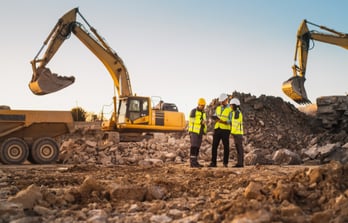
A haul truck in a mine, a forestry machine surrounded by dry debris, a wheel loader in a waste facility, and a compact machine working in tight spaces all have different hazards.
That is why the right fire suppression system should be based on a fire risk assessment.
A fire risk assessment looks at factors such as:
- Ignition sources
- Fuel sources
- Machine layout
- Hazard areas
- Operating environment
- Personnel exposure
- Debris exposure
- Maintenance access
- Company, insurance, or regulatory requirements
- Available fire protection options
The goal is to design the system around the actual machine and its operating conditions, not force a generic solution onto a high-risk application.
Why Maintenance Matters
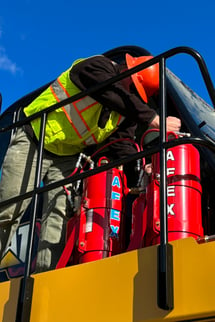 Installing a fire suppression system is only part of the process. Like the machine itself, the system needs routine inspection and maintenance.
A system that is not properly maintained may not perform as intended during a fire event. Over time, hoses can wear, nozzles can become blocked, components can be damaged, or parts may be moved during unrelated machine maintenance.
A strong maintenance plan may include:
- Pre-shift inspections by operators
- Monthly owner inspections
- Semiannual maintenance by trained personnel
- Required testing or replacement of certain components at manufacturer-specified intervals
Regular maintenance helps ensure the system is ready when it matters most.
Final Thoughts
A fire suppression system for heavy equipment is designed to detect a fire, alert the operator, and discharge suppression agent into protected hazard areas of the machine.
For operations in mining, forestry, waste and recycling, construction, oil and gas, transportation, agriculture, and other demanding industries, these systems are an important layer of protection for both people and equipment.
They do not replace good maintenance, proper cleaning, operator training, or safe work practices. But they do provide a critical line of defense when fire conditions come together.
Because when a fire starts, the operator’s job is to get out safely.
The system’s job is to help handle the fire.