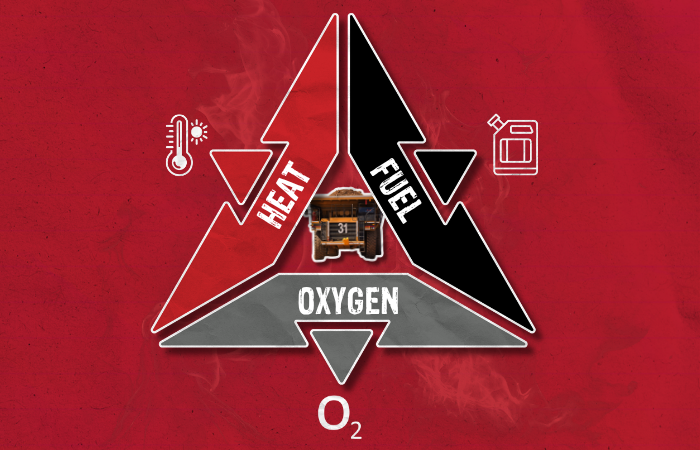
Heavy equipment fires rarely happen because of one single issue.
More often, they happen when the right conditions line up: heat, fuel, and oxygen. That combination is known as the fire triangle and understanding it is one of the simplest ways to understand why fire risk is so common on heavy-duty mobile equipment.
For equipment owners, operators, maintenance teams, and safety managers, the fire triangle is more than a fire science concept. It helps explain where fire risks come from, why routine maintenance matters, and how fire suppression systems are designed to respond when a fire starts.
What Is the Fire Triangle?
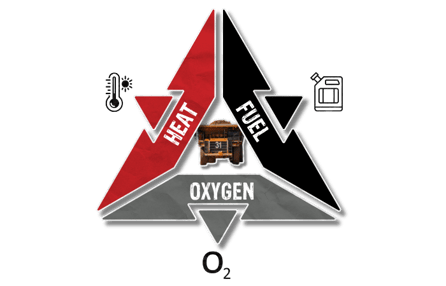
The fire triangle is a simple model that explains the three elements needed for a fire to start and continue burning:
Heat
Heat is the ignition source. On heavy equipment, heat can come from:
- Exhaust systems
- Turbochargers
- High engine temperatures
- Electrical faults
- Friction from moving parts
- Sparks or hot work near the machine
Fuel
Fuel is anything that can burn. On heavy equipment, common fuel sources include:
- Diesel fuel
- Hydraulic fluid
- Engine oil
- Grease buildup
- Rubber hoses and belts
- Wood chips, paper dust, trash, or other debris
Oxygen
Oxygen supports combustion. Since most heavy equipment operates in open-air environments, oxygen is almost always present. Engine compartments also rely on airflow for cooling, which can further support fire growth once ignition occurs.
When heat, fuel, and oxygen come together under the right conditions, a fire can start.
Remove any one of those elements, and the fire cannot continue.
Fire Triangle vs. Fire Tetrahedron
The fire triangle is a helpful starting point, but modern fire science also uses a more complete model called the fire tetrahedron.
The fire tetrahedron includes the same three elements: heat, fuel, and oxygen, but adds a fourth: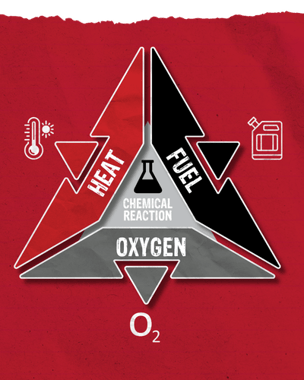
Chemical Chain Reaction
A chemical chain reaction is the ongoing process that keeps a fire burning after ignition.
This matters because some fire suppression methods do more than cool the fire or smother it. They can also interrupt the chemical reaction that allows combustion to continue.
In simple terms:
- Fire triangle - explains what a fire needs to start
- Fire tetrahedron - explains how a fire continues to burn and how suppression agents can stop it
Why Heavy Equipment Has a Higher Fire Risk
Heavy-duty mobile equipment often brings the elements of the fire triangle together in one machine.
These machines operate in demanding environments, often for long hours, under heavy loads, and in conditions where heat, fuel, and debris are difficult to avoid.
Common fire risk areas include:
Heat Sources
- Turbochargers and exhaust components
- Engine compartments
- Braking systems
- Electrical systems
- Bearings and moving components
- Components affected by poor ventilation or overheating
Fuel Sources
- Hydraulic fluid under pressure
- Diesel fuel lines and tanks
- Lubricants and grease
- Oil residue
- Rubber hoses, belts, and seals
- Accumulated combustible debris
Oxygen Sources
- Open-air operation
- Cooling airflow through engine compartments
- Ventilation around hot components
This is why heavy equipment fire protection requires more than a handheld extinguisher. The risks are often located deep inside the machine, near hot surfaces, pressurized fluids, and areas that may be difficult or unsafe for an operator to access during a fire.
Real-World Heavy Equipment Fire Scenarios
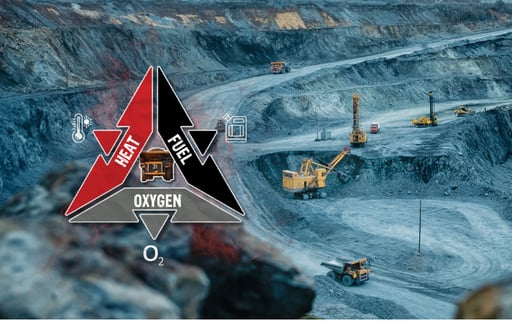
The fire triangle looks different depending on the machine and industry.
- Mining: A hydraulic hose fails on a haul truck or excavator, spraying fluid onto a hot turbocharger or exhaust component. Heat and fuel come together quickly, while airflow through the engine compartment helps feed the fire.
- Forestry: Wood chips, leaves, dust, and other debris build up around hot engine components. With enough heat and oxygen, that debris can ignite.
- Waste & Recycling: Combustible materials like paper, plastic, dust, and trash can collect in hidden areas of the machine. Heat, sparks, or friction can create the ignition source.
- Oil & Gas: High heat, pressurized fluids, and demanding operating environments can create fire risk in tight or hard-to-access machine compartments.
In each of these examples, the fire triangle is present. And in many cases, the conditions are not unusual. They are part of the machine’s normal operating environment.
That is why fire risk management is so important.
How Fire Suppression Systems Interrupt the Fire Triangle
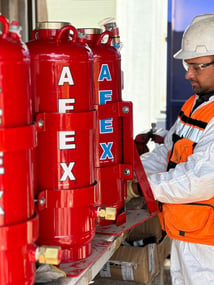 A fire suppression system is designed to respond quickly when a fire starts by attacking one or more parts of the fire triangle or fire tetrahedron.
Different suppression agents work in different ways.
Cooling the Fire
Liquid fire suppression agents help absorb heat and cool hot surfaces. This can reduce the temperature below the point needed to sustain combustion and help reduce the risk of re-ignition.
This is especially important when hot components remain hot even after the initial fire is knocked down.
Separating Fuel from Flame
Some suppression approaches help create a barrier between the flame and the fuel source. On heavy equipment, this can be especially important when combustible fluids, grease, or debris are involved.
Machine shutdown can also play an important role. When properly integrated, shutdown functions can help reduce the flow of fuel or hydraulic fluid that may continue feeding the fire.
Reducing Oxygen Around the Fire
Dry chemical agents can quickly flood a protected area, helping suppress flames by interfering with the fire’s ability to continue burning. This is especially useful in enclosed or semi-enclosed areas like engine compartments.
Interrupting the Chemical Chain Reaction
Some suppression agents also act on the chemical reaction that keeps the fire burning. This is where the fire tetrahedron becomes especially important.
By disrupting the combustion process, the system can help stop the fire even when heat, fuel, and oxygen are still present.
Why Fire Suppression Agent Selection Matters
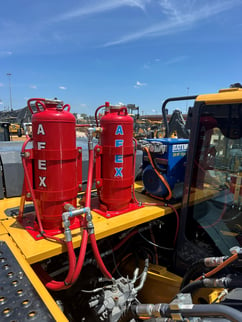 Not every machine has the same fire risk.
Some applications may benefit from a dry chemical system. Others may require a liquid agent system. Many heavy equipment applications benefit from a dual-agent approach, using both dry chemical and liquid agent to address different parts of the fire.
The right solution depends on the machine, the fire hazards present, the operating environment, and the areas being protected.
That is why fire suppression systems must be purpose-built for heavy-duty mobile equipment. Fire suppression for a mining haul truck, forestry machine, waste handler, or compact machine should not be treated like a one-size-fits-all product.
The system should be designed around the real risks of the equipment.
Why The Fire Triangle Matters for Daily Operations
Understanding the fire triangle can help maintenance teams and operators identify risk before it becomes an emergency.
It can guide questions like:
- Are fuel leaks or grease buildup present near hot surfaces?
- Is debris collecting in or around the engine compartment?
- Are hydraulic hoses routed near exhaust components?
- Are electrical issues, damaged wiring, or overheating components being addressed quickly?
- Are inspection and cleaning routines being followed consistently?
- Does the machine have a fire suppression system designed for its specific hazards?
Heavy equipment fires are often the result of conditions lining up over time. The fire triangle gives teams a simple way to recognize those conditions and take action.

Final Takeaway
The fire triangle helps explain why heavy equipment fires happen.
Heat, fuel, and oxygen are often present on the same machine, sometimes in the same compartment. Add a leak, debris buildup, electrical issue, or overheated component, and the risk increases quickly.
Understanding the fire triangle helps teams make better decisions around inspection, maintenance, machine design, and fire protection.
And when a fire does happen, a properly designed fire suppression system helps break the triangle before the situation gets worse.