What is the best fire suppression system for heavy equipment?
The best fire suppression system for heavy equipment fits the machine’s fire hazards, operating conditions, and service needs. Start with a machine-specific fire risk assessment, then evaluate suppression agents, automatic and manual activation, operator safety, applicable approvals, and ongoing support.
For fleet managers, the decision affects more than equipment repair costs. A fire can put an operator at risk, take a critical machine out of service, and interrupt work across an operation.
Two machines of similar size may need different protection because their layouts, attachments, fuels, hydraulic systems, and working environments can differ. Even machines of the same model may need different protection after changes to the equipment or how it is used.
Whether your fleet works in mining, waste handling, forestry, construction, oil and gas, or ports and terminals, start with the same questions: Where could a fire start? How could it spread? And what protection does this machine need?
Use these seven considerations to choose heavy equipment fire suppression that fits your fleet’s hazards, operating conditions, and service needs.
1. Where should fire hazards be assessed on heavy equipment?
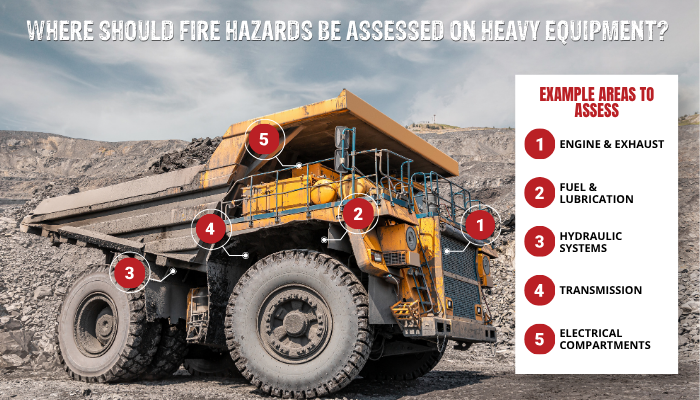
A fire risk assessment should identify where ignition sources could come in contact with combustible fluids or materials. Start with the engine compartment, then assess hydraulic systems, electrical components, auxiliary equipment, and debris buildup elsewhere on the machine.
How the equipment works matters, too. Movement, attachments, duty cycles, cleaning, and maintenance access can all affect the protection design.
Also consider the machine’s surroundings. Equipment spacing can influence how a fire spreads, whether an operator can evacuate safely, and how emergency personnel reach the equipment.
How do fire hazards differ by machine type?
These examples identify areas to assess. They do not provide a nozzle layout or replace a machine-specific assessment.
|
Machine type |
Examples of areas to assess |
|
Haul trucks |
Engine and exhaust areas, fuel and lubrication components, hydraulic systems, transmission, and generator or electrical compartments where fitted |
|
Loaders & waste handlers |
Engine bay, exhaust surfaces, hydraulic pumps and lines, articulation areas, and debris buildup |
|
Dozers and excavators |
Engine compartment, fuel and hydraulic components, hose routing, electrical equipment, and spaces where debris collects |
|
Forestry equipment |
Engine and exhaust areas, hydraulic components, attachments, and locations where wood debris collects |
|
Drills & oilfield equipment |
Engine and power-pack compartments, hydraulic components, compressor packages, and separate auxiliary equipment where fitted |
|
Skid steers & compact equipment |
Enclosed engine bays, hydraulic pumps and hose clusters, under-cab spaces, attachments, and debris traps |
|
Port & terminal equipment |
Engine or power unit, hydraulic systems, electrical compartments, and auxiliary equipment based on the machine’s configuration |
The assessment should explain which hazards need protection, how the system will reach those areas, and what remains outside its scope.
How does the industry affect the fire risk assessment?
The same machine can face different fire exposures depending on where it works.
- Mining: Consider duty cycles, fuel and hydraulic systems, dust and debris, and the equipment’s operating location. Evacuation, access, and emergency response needs may differ between surface and underground operations.
- Waste and recycling: Assess combustible material collecting around hot surfaces, along with the machine’s fuel, hydraulic, and electrical hazards.
- Forestry: Consider wood debris, attachment hydraulics, and access for regular cleaning and service.
- Oil, gas, and energy: Assess engines, hydraulic systems, auxiliary power units, and operating modules, along with equipment spacing. A fire on one frac pump can expose nearby units, so consider how fire could spread between machines.
- Construction: Account for attachments, changing tasks, debris, and equipment moving between job sites.
- Ports and terminals: Consider power sources, enclosed equipment bays, hydraulic systems, and whether the machine is operated from a cab, remotely, or autonomously.
For battery-electric equipment, confirm what the system protects and which battery hazards its testing covers. A system that protects against hydraulic fluid fires or other conventional machine hazards should not be assumed to address battery thermal runaway.
Question to ask: “What fire hazards have you identified on this machine, and which hazards will the proposed system protect?”
2. How do dry chemical, liquid agent, and dual agent systems compare?
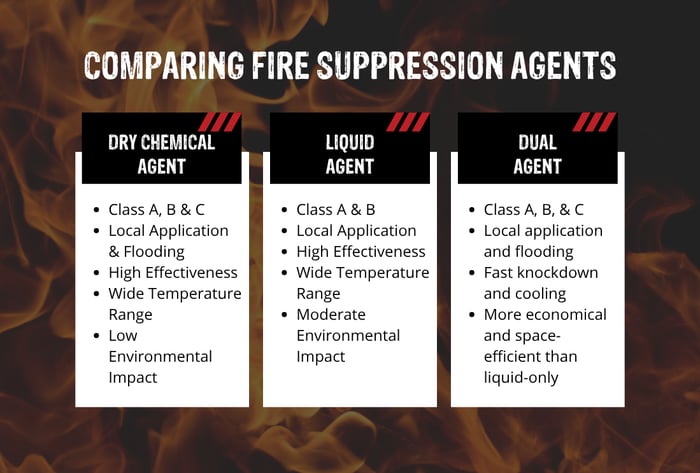
Dry chemical provides rapid flame knockdown and can provide total-flooding coverage in enclosed or semi-enclosed areas. Liquid agent helps suppress fires and cool hot surfaces. Dual agent combines these capabilities for machines whose fire hazards call for both rapid knockdown and cooling.
The right choice depends on the machine and its hazards. An agent’s name alone does not tell you whether a system is suitable.
|
System type |
What it provides |
What fleet managers should evaluate |
|
Dry chemical |
Rapid flame knockdown and total flooding coverage in suitable protected areas |
Agent fire ratings, compartment layout, operating temperature range, and distribution requirements |
|
Liquid agent |
Fire suppression and cooling, depending on the formulation and application |
Agent fire ratings, ability to reach hot surfaces and debris, electrical suitability, operating temperature range, and coverage requirements |
|
Dual agent |
A combination of dry chemical flame knockdown and liquid agent cooling to target different hazards |
Why both agents are needed, what each protects, installation space, distribution requirements, and service needs |
After flames are knocked down, components may stay hot enough to ignite leaking fluids or debris again. Liquid agent can help reduce this risk when it reaches those surfaces. Ongoing fuel or hydraulic fluid leaks also need to be addressed through the machine’s designed response and emergency procedures.
Performance depends on the full system design: detection, the amount of agent, how agent reaches protected areas, nozzle placement, installation, and maintenance.
AFEX offers dry chemical, liquid agent, dual agent, and compact liquid agent systems. Choose based on the fire risk assessment. One system type will not fit every machine.
Question to ask: “Why does this agent configuration fit our equipment, and what testing or approval documents supports that recommendation?”
3. Should heavy equipment have automatic and manual fire suppression activation?
Automatic activation allows the system to respond when a fire is detected, even if the operator cannot see the fire or respond. Manual activation lets the operator or another person discharge the fire suppression system.
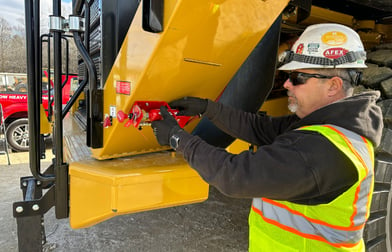 AFEX systems offer automatic and manual activation, with detection, controls, and response sequencing selected for the machine and application.
Automatic detection is especially useful when a fire starts outside the operator’s view. Manual activation provides another way to initiate suppression, with controls located where they can be safely accessed.
Fleet managers should understand each step of the response:
- Detection: How will the system identify a fire in protected areas?
- Warning: What will the operator see and hear?
- Activation: How will automatic and manual activation work?
- Shutdown: If engine shutdown is included, how will it work with discharge?
- Power: How will the system operate if machine power is lost?
- Readiness: How will faults be reported, and who will address them?
Detection must suit the machine’s layout and working conditions, including heat, vibration, and contamination. The timing and order of shutdown and discharge must follow the machine-specific design, system documents, and applicable requirements.
How should operator safety influence the design?
The operator needs to recognize the warning, know what to do, and reach safety.
Check whether operators can see and hear alarms while working. Review access to manual controls, escape routes, and possible fire exposure. Ask how agent discharge could affect visibility and what training operators need.
For remotely operated or autonomous equipment, confirm who receives alarms and who is responsible for responding.
The fire suppression system’s response should fit the operation’s emergency procedures. Operators need clear instructions for evacuation, keeping clear of the equipment, and what to do after a discharge.
Question to ask: “How will the system detect a fire, warn the operator, and activate if the operator cannot respond?”
4. Which approvals and requirements matter for heavy equipment fire suppression?
Relevant approvals provide evidence that a system has been evaluated against defined requirements. Fleet managers should confirm that the approval or certificate covers the proposed system configuration and application.
An approval logo alone does not mean every configuration or installation is covered.
What is FM 5970 HDME, and why does it matter?
FM 5970 HDME is an approval standard for heavy-duty mobile equipment protection systems. It addresses fire protection performance and requirements for systems installed on this equipment.
Ask for the proposed system’s FM Approval listing and check what it covers, its configuration limits, and installation requirements. Do not assume an approval for another type of fire protection application covers heavy-duty mobile equipment.
What is AS 5062, and why does it matter? 
AS 5062:2022 addresses fire prevention and protection for mobile and transportable equipment. It covers fire suppression system assessment, design, installation, commissioning, and maintenance.
For an ActivFire-cerified system, ask for its certificate and review the conditions and limits.
Product certification and proper installation serve different purposes. The installation must still follow the system documents and applicable requirements.
What other requirements should fleet managers consider?
Requirements may also come from local authorities, the industry, insurer, customer, site, or equipment manufacturer. Hazardous environments may require additional approvals for the specific configuration.
Ask the supplier to identify which requirements apply and explain how the system meets them.
Question to ask: “Can you provide the current listing, certificate, and supporting documentation for the system you’re proposing?”
5. Who will install and support the system where your equipment operates?
A fire suppression system needs qualified installation and ongoing service where the machine works. Evaluate the people, parts, and service resources available for assessment, installation, commissioning, inspections, repairs, and service after a discharge.
For fleets operating across several locations or countries, confirm coverage at each location. Service availability may vary, even with the same supplier.
Discuss:
- Relevant experience: Have the installers worked on your equipment types and applications?
- Installation and commissioning: Where will the work be completed, and what records will your team receive?
- Service availability: Who handles routine inspections and system faults?
- Parts and recharge materials: What is stocked locally, and what needs to be ordered?
- Training: What training will operators and maintenance personnel receive?
- Documentation: Are instructions and records available in the required language?
- Accountability: Who is your contact when service is needed?
- Relocation: How will support be arranged if a machine moves outside the service area?
Ask for realistic schedules and response times. Nearby representation helps, but effective support depends on available technicians, inventory, and service capabilities.
Question to ask: “Who will install, commission, and maintain our systems at each operating location?”
6. What maintenance and lifetime costs should fleet managers evaluate?

The purchase price is only one part of the cost. Compare inspection and maintenance needs, parts, service labor, travel, recharge procedures, and the downtime needed to complete the work.
The system should also fit the fleet’s maintenance routines. A design that is difficult to access or service can create problems long after installation.
Can technicians access the system for service?
Check access to tanks, detection components, distribution lines, nozzles, controls, and manual activation points. The installation needs to allow both suppression coverage and regular machine service.
Ask which checks your team can perform and which need a trained service provider. Include appropriate system checks in the fleet’s pre-shift inspection process, and follow the system documentation and applicable requirements for inspection and maintenance intervals.
Routine machine cleaning, leak repairs, and preventative maintenance remain essential parts of reducing fire risk.
What happens after a discharge?
Returning equipment to work takes more than refilling the suppression agent. The cause of the fire must be addressed, and both the machine and suppression system need to be inspected before returning to service.
Understand how components will be serviced or replaced, agent replenished, and system readiness checked. Confirm who performs the work, which materials are available, and what could delay the return to service.
Installation is just the beginning. See what comes next.
What changes require reassessment?
New attachments, changes to hose routing or bodywork, replacement components, or a different operating application may affect the original protection design.
Set a process for reviewing relevant machine changes with the suppression provider. Keep assessment, installation, commissioning, and service records accessible to those responsible for the equipment.
Question to ask: “What will it take to keep this system ready throughout the machine’s working life, including after modifications or a discharge?”
7. How should fleet managers compare fire suppression proposals?

Compare proposals against the same machine hazards and operating needs. To compare prices, understand any differences in protection, installation, documents, training, and service.
Before deciding, confirm that each proposal explains:
- Protection scope: The hazards and areas are covered, and which are excluded.
- System design: Agents, detection, activation, and any machine shutdown functions.
- Supporting evidence: Relevant approvals, certificates, and installation requirements.
- Operator response: Warnings, controls, training, and emergency procedures.
- Ongoing support: Service responsibilities, maintenance costs, and plans for service after a discharge.
If these details are missing, request clarification before treating proposals as equivalent.
Talk with AFEX about your fleet’s fire protection needs
Choosing heavy equipment fire suppression starts with understanding the machine, its operators and maintenance team, and where it works.
AFEX specializes in fire suppression for heavy-duty mobile equipment. Our team and trained distributor network help customers evaluate machine-specific hazards, select a system, and plan installation and ongoing service. The goal is protection that fits the equipment and can be maintained where it works.
Share your equipment types, operating locations, and concerns with AFEX to discuss the next steps for your fleet.