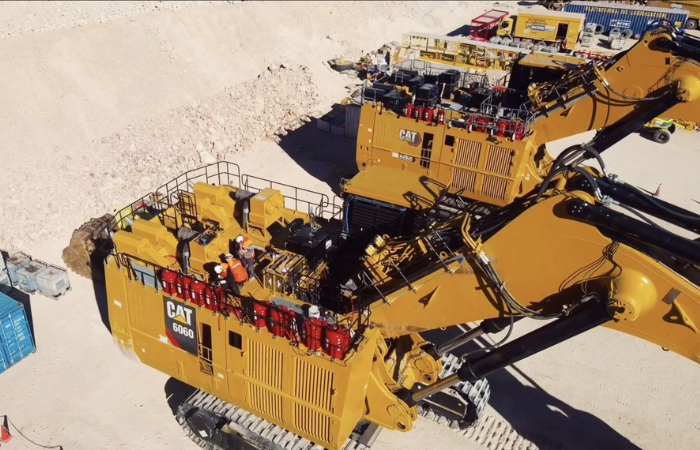
Equipment fires are among the most disruptive events a mining operation can face. The first priority is always protecting the operator and nearby personnel, but the impact of a fire often continues long after the flames are out.
A fire on a haul truck, hydraulic shovel, loader, dozer, drill, or other production machine can lead to damaged components, emergency repairs, inspections, insurance conversations, production delays, and days or weeks of unplanned downtime.
That is why fire suppression should be viewed as part of a mine’s uptime and reliability strategy, not only as a safety requirement.
For many large mining machines, dual agent fire suppression provides an important advantage because it addresses two critical parts of the fire event: fast flame knockdown and cooling of hot surfaces that can contribute to re-ignition.
What is Dual Agent Fire Suppression?
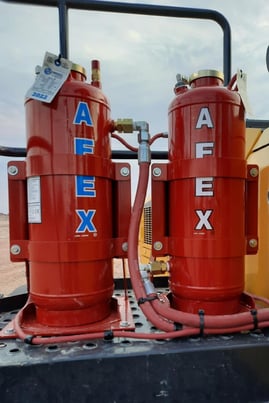
A dual agent fire suppression system uses two complementary suppression agents to protect heavy mobile equipment, but they are not applied to the same fire risk in the same way.
Instead, each agent is directed at different types of hazards within the machine.
- Dry chemical agent is typically used to target fast-moving flame risks, such as fuel or hydraulic fluid fires, where rapid knockdown is critical.
- Liquid agent is applied to areas where heat buildup is the primary concern, such as hot surfaces, exhaust components, and surrounding structures that could contribute to re-ignition.
By addressing different fire risks with the most appropriate agent type, the system provides more targeted protection across the machine.
For mining equipment, this matters because fires often occur in crowded engine compartments and hydraulic areas where combustible fluids, hot exhaust components, electrical systems, hoses, wiring, and debris may all be present at the same time.
Why Are Mining Equipment Fires So Disruptive?
Mining equipment operates under some of the most demanding conditions in the world. Machines run for long hours, carry heavy loads, work in dusty environments, and generate significant heat.
Industry data shows that fires are a persistent risk in mining and heavy equipment operations. According to the U.S. Mine Safety and Health Administration (MSHA), hundreds of fires are reported annually across surface and underground mines.
In addition, studies from organizations such as the National Institute for Occupational Safety and Health (NIOSH) have found that mobile equipment fires are among the most common types of fire incidents in mining, particularly on diesel-powered machinery with large hydraulic systems.
Common fire risks on mining equipment include:
- Hydraulic hose failures
- Fuel leaks
- Turbochargers and exhaust components
- Electrical faults
- Friction from moving parts
- Combustible debris near hot surfaces
- High-pressure fluid spray near ignition sources
When a fire starts, the event can escalate quickly. A small leak near a hot surface can become a larger engine compartment fire, especially if hydraulic fluid, diesel fuel, or accumulated debris is involved.
The fire itself may last only minutes. The downtime that follows can last much longer.
How Does Dual Agent Fire Suppression Reduce Downtime?
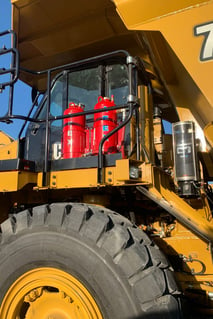 Dual agent fire suppression helps reduce downtime by limiting how far the fire spreads, reducing heat damage, and lowering the chance of reflash after the initial flames are suppressed.
That combination can make a significant difference in how much repair work is needed before the machine can safely return to service.
1. Faster Flame Knockdown
In a fire event, seconds matter. The longer flames continue, the more heat spreads to surrounding components.
Dry chemical agent is valued for fast flame knockdown. On heavy equipment, that quick response can help prevent a localized fire from spreading deeper into the engine compartment or to nearby fuel, hydraulic, and electrical systems.
Faster control can mean less damage, fewer replacement parts, and a more manageable recovery process.
2. Cooling Hot Surfaces
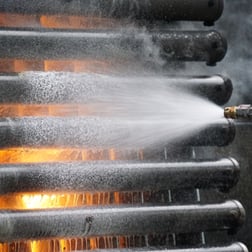 Even after flames are suppressed, hot surfaces can remain dangerous.
Turbochargers, exhaust components, manifolds, and nearby metal surfaces may stay hot enough to reignite leaking fuel or hydraulic fluid. This is where the liquid agent adds value. It helps absorb heat and cool targeted areas after the initial knockdown.
Cooling is especially important on mining equipment because large machines often have high operating temperatures, confined compartments, and multiple fire hazards located close together.
3. Lower Risk of Reflash
One of the most serious concerns after a fire is reflash. A fire may appear to be out, but if fuel or hydraulic fluid contacts a surface that is still hot enough to ignite it, the fire can restart.
Dual agent systems help address this risk by combining dry chemical knockdown with liquid agent cooling. The goal is not just to suppress the fire, but to reduce the conditions that could allow it to reignite.
4. Less Secondary Damage
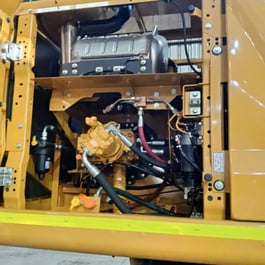 Heat can damage components that were never directly touched by flame.
Wiring harnesses, sensors, hoses, belts, plastic reservoirs, connectors, electronic components, and nearby accessories can all be affected by prolonged heat exposure. By helping control the fire quickly and cool hot surfaces, dual agent systems can reduce the extent of secondary damage.
That can simplify the repair process. Instead of rebuilding large portions of the engine compartment, maintenance teams may be able to focus on the failed component and the immediate surrounding area.
5. Faster Return to Production
For mining operations, downtime is rarely isolated to one machine.
If a haul truck, shovel, or loader is out of service, production schedules may need to be adjusted. Operators may be reassigned. Maintenance teams may be pulled away from planned work. Rental equipment may be needed. Other machines may carry additional load to compensate.
When fire damage is limited, the equipment can often be inspected, repaired, and returned to service more efficiently. That supports fleet availability and helps reduce the operational impact of the event.
6. Stronger Safety Culture
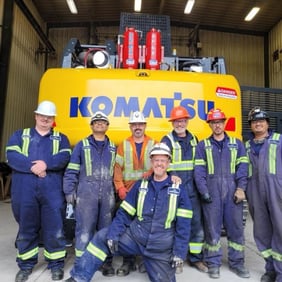 Fire suppression also plays a role in how operators and maintenance teams think about risk.
When crews know equipment is protected by a system designed to detect and suppress a fire quickly, it reinforces the message that safety is built into the operation, not treated as an afterthought. Operators still need training, awareness, and clear emergency procedures, but automatic fire suppression adds another layer of protection when seconds matter.
That confidence can support a stronger safety culture across the site. It helps operators stay focused on safe machine operation, gives maintenance teams a clearer protection strategy to support, and shows that the operation is taking practical steps to protect people, equipment, and production.
When Does Dual Agent Fire Suppression Make Sense for Mining Equipment?
Dual agent fire suppression is often a strong fit for high-value mining equipment with large hydraulic systems, high heat areas, and complex engine compartments.
Equipment commonly considered for dual agent protection includes:
- Hydraulic mining shovels
- Large haul trucks
- Wheel loaders
- Large excavators
- Dozers
- Drills
- Material handlers
- Other high-production support equipment
These machines often combine several fire risk factors: hot surfaces, combustible fluids, electrical systems, long duty cycles, and limited space inside protected areas.
In some mining applications, dual agent fire suppression may also be required or strongly supported by standards, site requirements, insurance expectations, or a Fire Risk Assessment. Operations should review applicable regulations and standards, including NFPA 122 where relevant, along with their own site-specific requirements.
Dual Agent vs. Single Agent Fire Suppression
.png?width=319&height=479&name=dual%20agent%20mining%20tanks%202%20(3).png)
Single agent systems can be a good fit for many types of heavy equipment. The right choice depends on the machine, the operating environment, the fire hazards present, and the level of protection required.
The main advantage of dual agent fire suppression is that it uses two suppression methods together.
Dry chemical agent provides fast flame knockdown. Liquid agent provides cooling to help reduce residual heat and lower the risk of reflash.
For large mining equipment with significant hydraulic fluid volumes, high operating temperatures, and high downtime costs, that combined approach can provide an added layer of protection.
Fire Suppression is Part of a Larger Reliability Strategy
A fire suppression system is not just a product installed on a machine. It is part of a broader approach to safety, maintenance, equipment reliability, and operator confidence.
When fire protection is designed around the way a machine actually works, it supports more than emergency response. It helps reinforce safe operating practices, gives crews confidence that known hazards have been addressed, and helps maintenance teams plan inspections and service around a defined protection strategy.
To get the greatest value from a fire suppression system, mining operations should consider:
- The specific fire hazards on each machine
- The size and layout of the protected areas
- Hydraulic fluid and fuel volumes
- Heat sources and ignition risks
- Operator escape routes
- Detection and actuation options
- Inspection and maintenance access
- Site standards and regulatory requirements
- Distributor or service support availability
The goal is to design protection around the way the machine actually works.
A well-designed system can help protect the operator, limit equipment damage, support faster recovery, and reduce the operational impact of a fire.
Investing in Uptime, Not Just Fire Protection
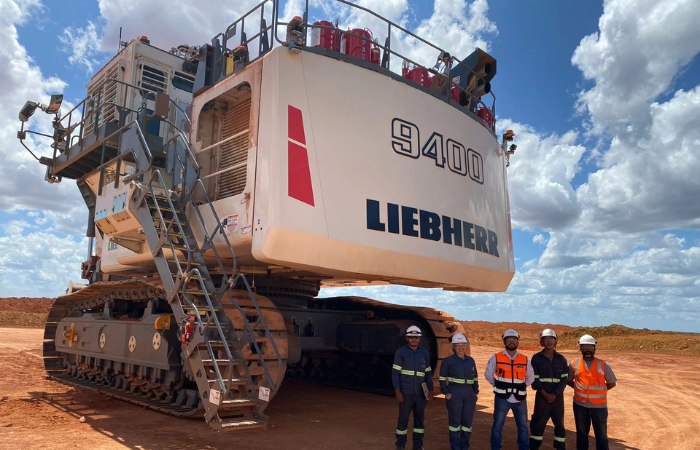
For mining operations, the value of fire suppression is not measured only by whether a fire is extinguished. It is also measured by what happens next.
How much damage was prevented? How quickly can the machine be inspected? How much repair work is required? How soon can the equipment return to production?
Dual agent fire suppression helps answer those questions by combining fast flame knockdown with cooling of hot surfaces. For large mining machines where downtime is expensive and fire risks are complex, that combination can help reduce damage, lower the chance of reflash, and support faster recovery after a fire event.
In demanding mining environments, protecting uptime starts with protecting the people and equipment that keep production moving.