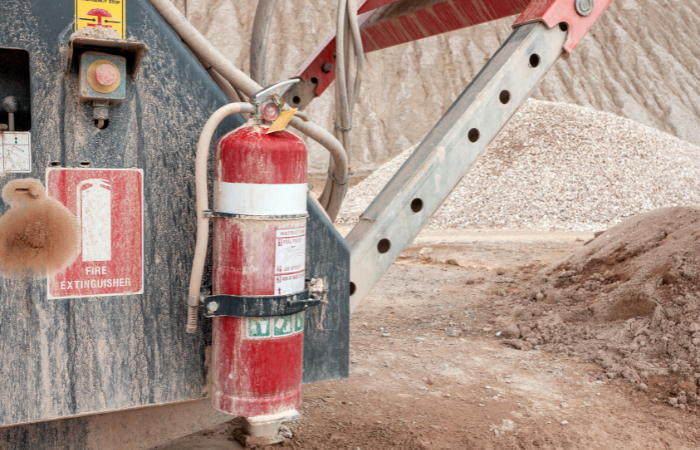
Fire extinguishers are important, but they are not enough on their own to protect people and heavy-duty mobile equipment from fire. Heavy equipment fires can start in hidden areas, spread quickly, and place operators in danger before they can safely reach and use a portable extinguisher.
The goal of fire protection should not be to turn operators into firefighters. It should be to help them recognize the hazard, exit safely, and allow the fire suppression system to begin the response.
An onboard fire suppression system is a permanently installed system on mobile heavy equipment that detects fires, alerts the operator, and discharges suppression agent automatically or manually into high-risk hazard areas — without requiring the operator to approach the fire.
That distinction matters. When a fire starts on heavy equipment, the situation can change in seconds.
Hot engine components, pressurized hydraulic fluid, diesel fuel, electrical systems, and debris buildup can create the perfect conditions for a fire to spread quickly. In industries like mining, forestry, construction, waste and recycling, agriculture, and oil and gas, these risks are part of daily operations.
Portable fire extinguishers remain valuable safety tools, but they rely on a person being able to recognize the fire, stop the machine, exit safely, retrieve the extinguisher, approach the hazard, and use it effectively. In a real fire event, that may not be safe or realistic.
That is where onboard fire suppression systems play a critical role. By detecting fires early, alerting the operator, and discharging suppression agent directly into high-risk areas, these systems help reduce reliance on manual firefighting and allow operators to focus on safe evacuation.
With over 50 years of experience designing and manufacturing fire suppression systems for heavy-duty mobile equipment, AFEX has seen firsthand how quickly these situations can escalate — and how the right system design makes the difference between a controlled response and a catastrophic outcome.
In this article, we’ll cover:
- The role of fire extinguishers on heavy equipment
- Why extinguishers have limitations in mobile equipment applications
- How onboard fire suppression systems help protect people
- Why automatic detection and actuation matter
- How extinguishers and fire suppression systems work together
Why Heavy Equipment Fires Are Different
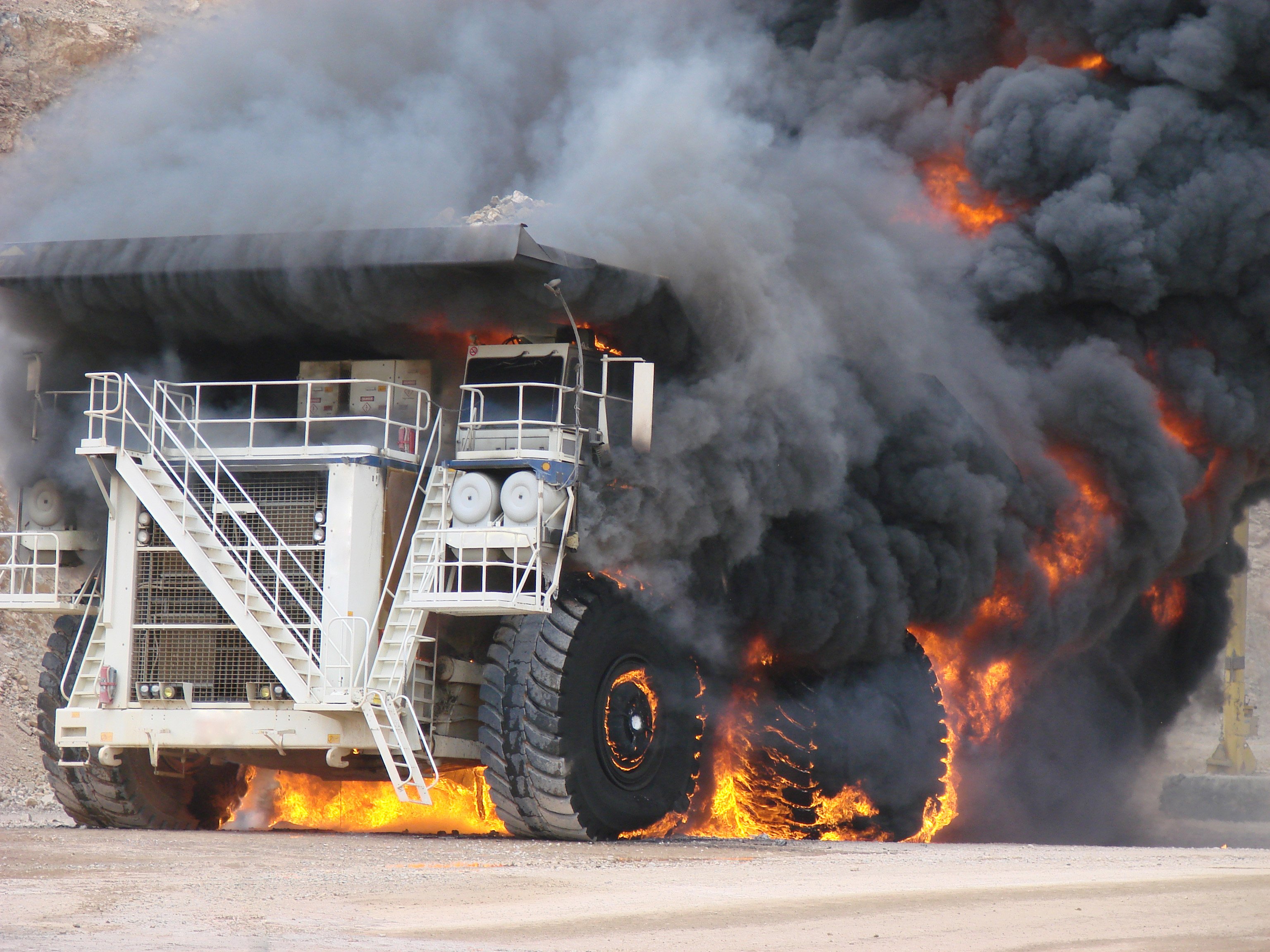
Heavy equipment fires are not the same as small fires in a shop, office, or controlled indoor environment.
Mobile equipment operates in demanding conditions. These machines often run for long hours in environments with heat, dust, vibration, debris, and heavy workloads. Many also have multiple ignition sources and combustible materials located close together inside tight engine compartments.
Common fire hazards on heavy equipment include:
- Hydraulic fluid leaks
- Fuel leaks
- Turbochargers and exhaust components
- Electrical shorts
- Overheated brakes
- Debris accumulation
- Battery systems
- Oil-soaked materials
These risks are common across heavy-duty industries like mining, forestry, waste and recycling, construction, agriculture, oil and gas, ports and material handling, transportation, and ground support equipment.
One of the biggest challenges is visibility. Fires often begin in areas the operator cannot easily see from the cab — behind panels, inside engine compartments, or around hydraulic and electrical components. By the time flames or smoke are visible, the fire may already be well developed.
That matters because the operator may not have time to safely assess the situation, exit the equipment, retrieve an extinguisher, and approach the fire. In a real fire event, seconds matter, and people should not be expected to put themselves in danger to protect a machine.
What Fire Extinguishers Are Designed to Do
Portable fire extinguishers remain an important part of heavy equipment safety, but their role should be clearly understood.
On heavy equipment, a fire extinguisher should not be viewed as the operator’s primary way to fight the fire. Its main purpose is to support safe egress.
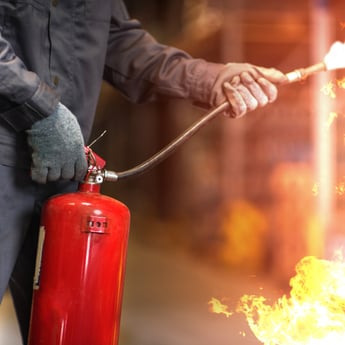 If a small fire or flames are blocking the operator's path off the machine, a portable extinguisher may help clear a path so the operator can exit and move away from the hazard. In some cases, extinguishers may also assist with very small spot fires or provide supplemental support for emergency responders — but only when they can be used safely.
Operators should still be trained on:
- Proper extinguisher use
- Emergency evacuation procedures
- Safe response practices
- When not to fight a fire
That last point is especially important.
A portable extinguisher can be helpful, but it should never make an operator feel responsible for fighting a machine fire. The priority is getting the operator off the equipment and away from danger. The extinguisher is a safety tool to support escape — not a reason to put a person back into danger.
Why Fire Extinguishers Alone Are Not Enough for Heavy Equipment Fires
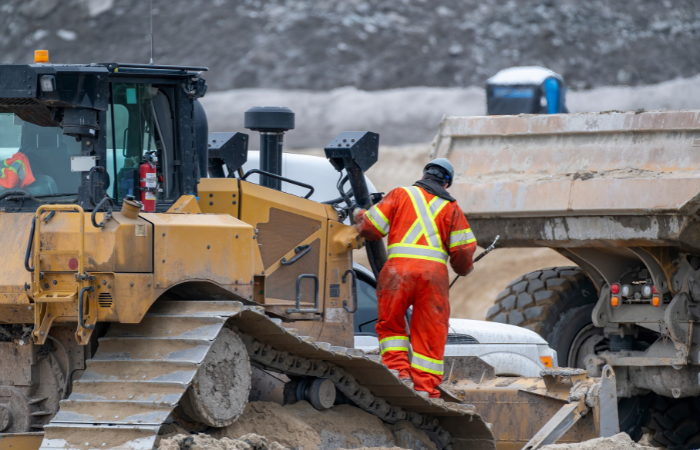
Equipment fires can spread faster than an operator can respond.
Portable extinguishers depend entirely on human response. The operator has to:
- Recognize there’s a fire
- Stop the machine
- Exit safely
- Retrieve the fire extinguisher
- Reach the fire
- Use the extinguisher effectively.
That takes time — and on heavy equipment, time is exactly what you don't have.
Fires on heavy equipment spread fast.
A fire may be fed by hydraulic fluid, fuel, oil, debris, airflow, or hot surfaces. A leaking hose spraying fluid onto a turbocharger or exhaust component can ignite in seconds. Electrical issues may spread behind panels before flames are ever visible.
By the time the operator is aware of the problem, the fire may already be beyond what a handheld extinguisher can safely handle.
Extinguishers require people to move toward the hazard.
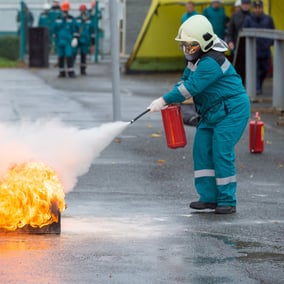 One of the biggest limitations of a portable extinguisher is that it requires a person to approach the fire. This can expose the operator or responder to:
- Intense heat
- Smoke inhalation
- Toxic gases
- Poor visibility
- Explosions or flare-ups
- Falling debris
- Pressurized hydraulic failures
On large heavy equipment, even getting down from the cab can be difficult during an active fire event. Depending on the machine, operators may be sitting 10, 15, or even 20+ feet above the ground. If smoke, flames, heat, or poor visibility are present, safely climbing down from that height becomes far more dangerous.
In that situation, the operator should be focused on getting off the machine and away from danger — not trying to reach the fire with a portable extinguisher.
Extinguishers have limited agent capacity.
Portable extinguishers have limited discharge time and limited agent capacity.
Heavy equipment fires may involve multiple hazard areas, hidden fire locations, pressurized fluids, or reignition risks. Even if visible flames are knocked down, heat may remain in the compartment and cause the fire to restart.
That is especially challenging when the fire is inside an enclosed engine compartment or behind guards and panels where a handheld extinguisher may not reach the source effectively.
Human response is not always predictable.
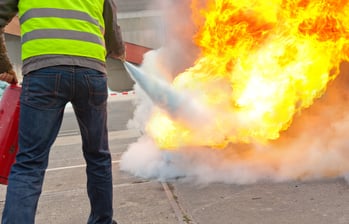
Even a well-trained operator can struggle during an emergency.
Stress, panic, confusion, smoke, alarms, or poor visibility can all affect response time and decision-making. An operator may hesitate, misjudge the severity of the fire, or attempt to fight a fire that is no longer safe to approach.
Training is essential, but human response will always vary — which is why many operations look for fire protection that does not depend entirely on manual intervention.
What is a Fire Suppression System for Heavy Equipment?
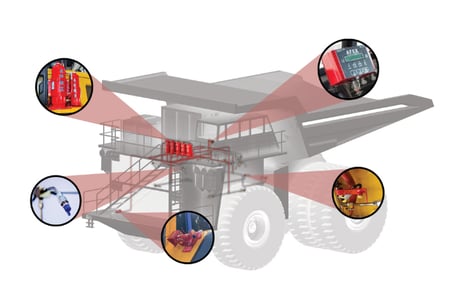 A fire suppression system for heavy equipment is an onboard system designed to detect and suppress fires on mobile machines. The system typically includes detection components, a monitor panel, actuators, agent tanks, distribution tubing or hose, and nozzles placed near high-risk areas of the machine.
When a fire is detected, the system alerts the operator and can discharge suppression agent directly into the protected areas of the equipment — in many cases, before the operator ever reaches for an extinguisher.
Industry standards for heavy equipment fire suppression
 Fire suppression requirements for heavy equipment can vary by industry, application, and region. In mining, NFPA 122 addresses fire prevention and control for metal/nonmetal mining and mineral processing facilities, including diesel-powered and certain mobile equipment applications. In Australia, AS 5062 is a key standard for fire protection systems on mobile and transportable equipment.
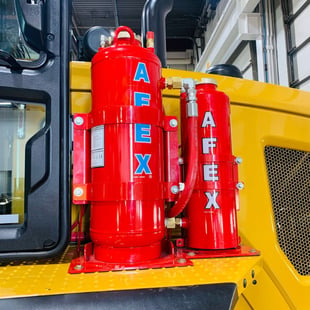
AFEX fire suppression systems are designed specifically for heavy-duty mobile equipment and are certified to recognized standards including FM 5970 HDME and ActivFire AS 5062:2022, depending on system configuration and market requirements. AFEX also holds ISO 9001:2015 certification for its quality management system. These third-party approvals help support safety, reliability, and compliance expectations for demanding heavy equipment applications.
How Fire Suppression Systems Help Protect People and Equipment
Fire suppression systems are designed for the unique challenges of heavy-duty mobile equipment.
Unlike a portable extinguisher, an onboard fire suppression system is installed directly on the machine. It monitors high-risk areas, alerts the operator, and can discharge suppression agent automatically or manually, depending on the system configuration.
Most importantly, it helps reduce the expectation that a person must move toward the fire to begin the response.
Early Fire Detection
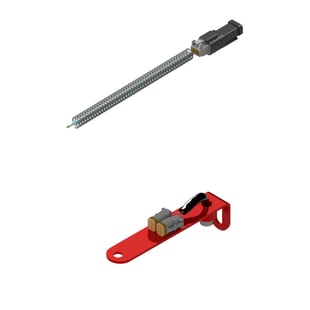 AFEX fire suppression systems use detection components installed in high-risk areas of the machine. These include linear heat detection wire and spot thermal detectors placed near areas such as:
- Engine compartments
- Hydraulic systems
- Turbochargers
- Electrical compartments
- Transmission areas
Early detection matters because the sooner a fire is identified, the sooner the operator can be alerted and suppression can begin. That extra time can make a major difference for the person in the cab.
Automatic System Actuation
One of the biggest advantages of an onboard fire suppression system is automatic actuation.
When the system detects a fire, it can discharge suppression agent without waiting for the operator to take manual action. This helps reduce response delays and gives the operator more time to focus on stopping the machine and exiting safely.
Automatic actuation helps:
- Suppress fires earlier
- Reduce reliance on human reaction time
- Improve operator evacuation time
- Support a faster emergency response
- Keep people farther away from the hazard
The system can respond even when the operator cannot.
Immediate Operator Alerts
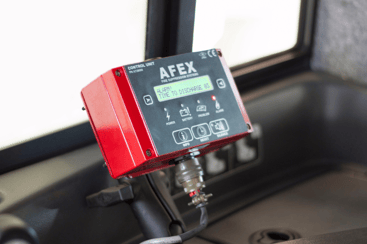 A fire suppression system also helps notify the operator quickly. Depending on the system configuration, alerts may include audible alarms, visual warning indicators, monitor panel notifications, or integration with other equipment systems. Early warning gives the operator more time to stop the machine, follow site procedures, and evacuate.
This is one of the most important differences between a portable extinguisher and an onboard system. The extinguisher is only useful after a person knows there is a fire and is able to respond manually. A fire suppression system alerts the operator and begins suppression — before the operator ever reaches for an extinguisher.
Targeted Agent Distribution
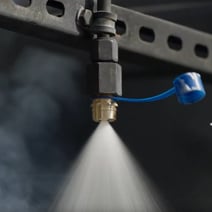 An onboard fire suppression system is designed around the specific fire risks of the machine. Nozzles are strategically positioned to direct suppression agent into protected hazard areas, which may include turbochargers, starters, alternators, hydraulic pumps, fuel filters, engine compartments, transmission areas, and other high-risk locations.
This targeted approach helps deliver agent where it is needed most, including areas that may be difficult or unsafe for a person to access with a handheld extinguisher.
How Fire Suppression Systems Improve Operator Safety
The most important reason to use a fire suppression system is operator safety.
During a fire event, the operator’s priority should be to stop the machine if possible, exit safely, move away from the equipment, and follow emergency procedures. They should not be expected to become the firefighter.
An onboard fire suppression system helps shift the operator’s role away from manual firefighting and toward safe evacuation. Instead of requiring the operator to approach the fire, the system can begin suppressing it while the operator focuses on getting away from the hazard.
That is the point: people should not have to fight machine fires. Fire protection should help protect the person first.
Learn what operators should do during a heavy equipment fire.
Where Fire Extinguishers Still Fit
Portable fire extinguishers still have a place in heavy equipment fire protection, but they should be understood as supplemental safety tools.
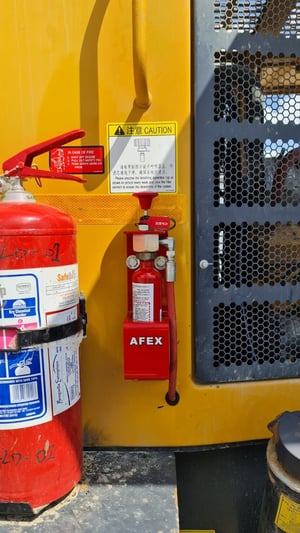 In many heavy equipment fire events, the extinguisher’s main role is to help support operator egress. If flames or a small fire are blocking a safe exit route, a portable extinguisher may help the operator clear a path and get away from the machine.
On heavy equipment, extinguishers may be useful for:
- Helping clear a path to exit
- Supporting operator evacuation
- Addressing very small spot fires when it is safe
- Providing backup support for emergency responders
This is why many operations use both onboard fire suppression systems and portable extinguishers together. The fire suppression system helps address the machine fire quickly. The extinguisher helps support the person’s safe exit when it can be used safely.
The key is understanding the role of each tool. An extinguisher should not be the entire fire protection plan, and it should not place the burden of fighting the fire on the operator.
Conclusion
Fire extinguishers are important, but they should never be the only plan for a heavy equipment fire.
Mobile equipment fires can start in hidden areas, spread quickly, and place operators in danger before a handheld extinguisher can be used safely. In many cases, the safest response is not asking someone to fight the fire — it is giving them time to get out safely.
That is why onboard fire suppression systems play such an important role in heavy equipment fire protection. By detecting fires early, alerting operators quickly, actuating automatically, and distributing suppression agent into high-risk areas of the machine, these systems help reduce reliance on manual firefighting and support safer evacuation.
AFEX has been engineering purpose-built fire suppression systems for heavy-duty mobile equipment for over 50 years. Our systems are designed to protect operators first — and to perform reliably in the toughest operating environments in the world.
Portable extinguishers still belong on heavy equipment, but they should be part of a larger strategy focused first on protecting people. When it comes to heavy-duty mobile equipment, the best fire response often starts before the operator ever has to pick up an extinguisher.